State College Planning Commission on Dec. 3 reviewed a final land development plan for a new student housing complex to be constructed on Penn State’s University Park campus in a public-private partnership.
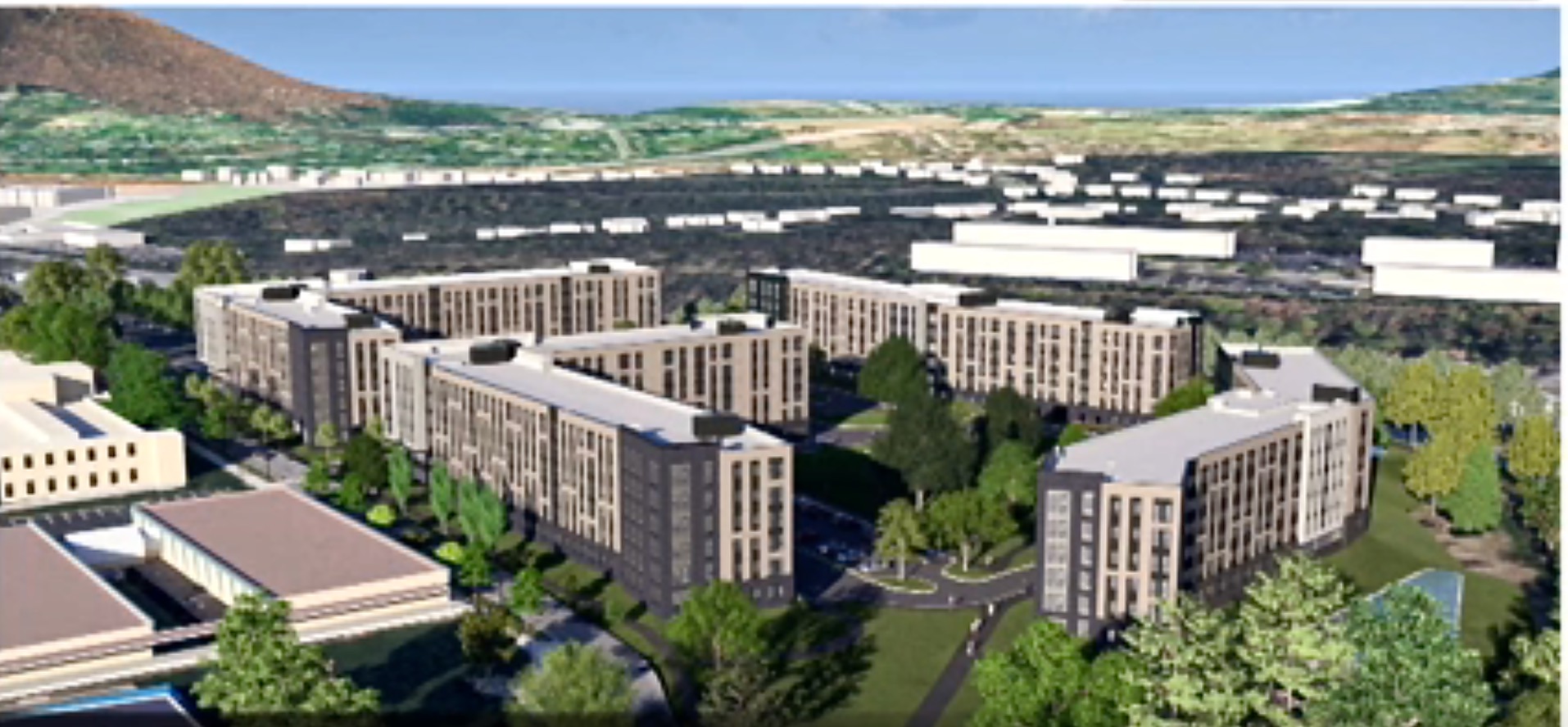
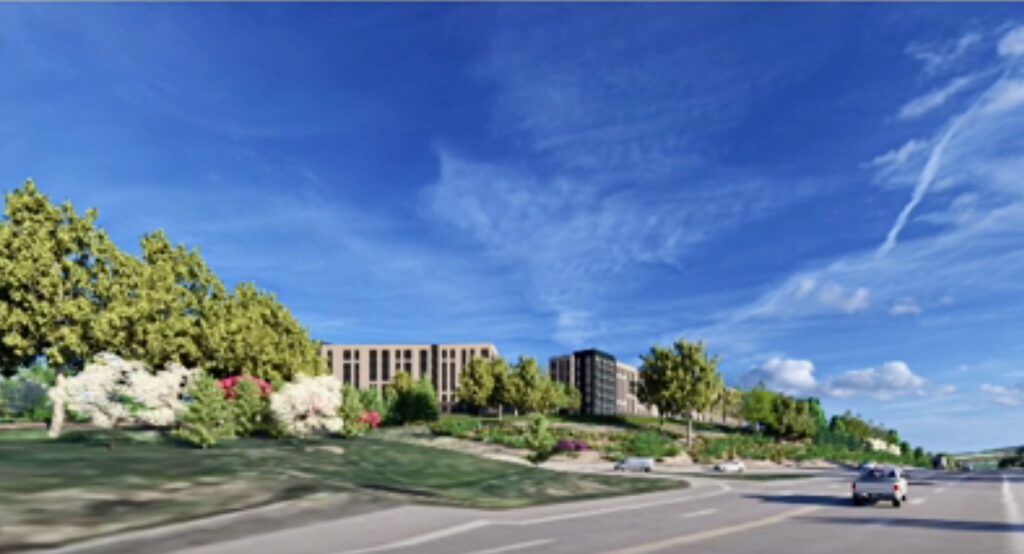
The university plans to ground-lease 16.8 acres along the southeast corner of Hastings Road and University Drive to Greystar Development for a four-building complex totaling 1,505 beds. The site is currently used for long-term student parking.
Construction is slated to begin on the project in the spring and be completed in two phases, Chris Nasuti of project engineer HRG said. Two buildings constructed in phase one will have 876 beds and be completed in 2028, while the other two buildings with 629 beds will be completed in 2029.
A total of 753 parking spaces will include 353 on the development parcel and 400 on an adjacent plot leased from Penn State. The leased parking will be dedicated for tenants of the Greystar complex and will not be shared with other university users, Nasuti said.
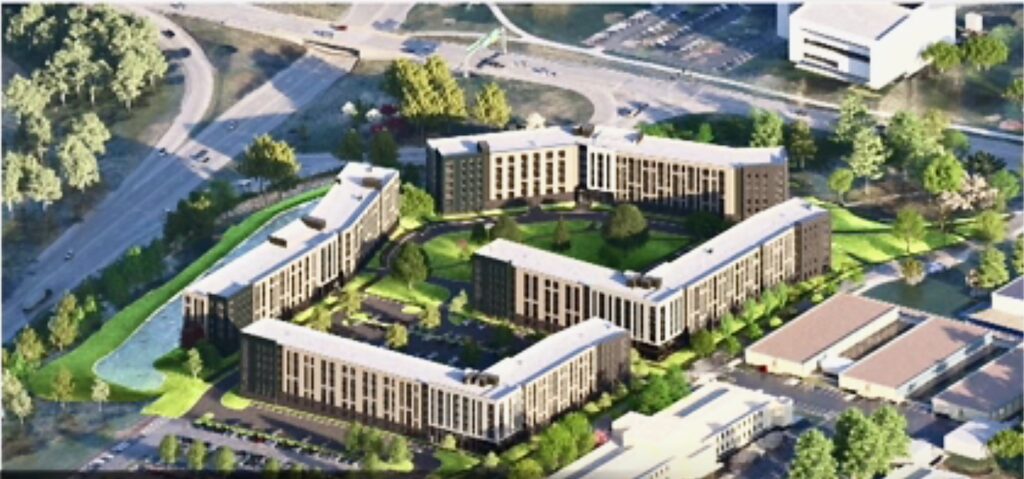
Two access points will be on Hastings Road, with traffic flowing to the University Drive intersection. A traffic impact study has been reviewed and accepted by the borough and College Township, where a small portion of the project site is located, and traffic patterns will be reevaluated 15 to 18 months after construction, Nasuti said.
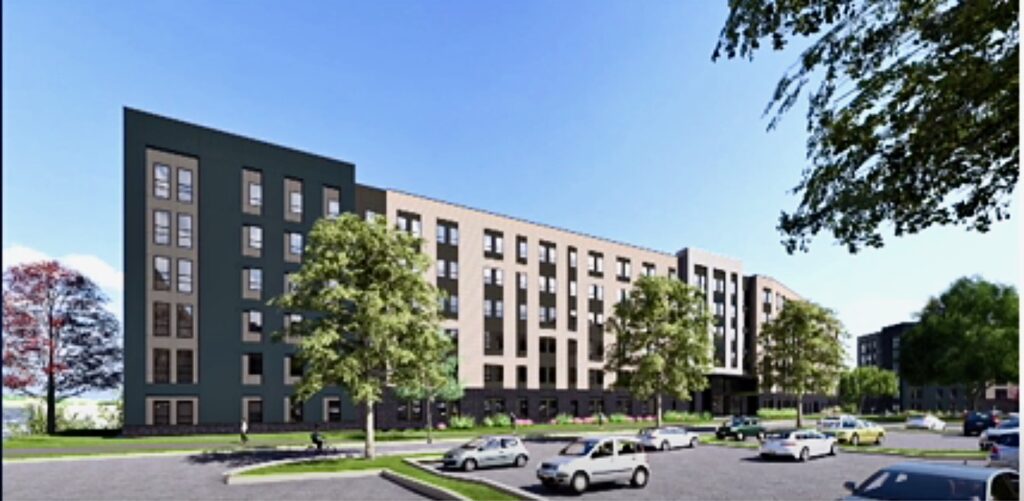
For the building exteriors, the materials will use a “more neutral color palate,” Matt Lamm of WDG Architecture said. Materials will include fiber cement cladding, brick, glazed aluminum storefront for entrances and metal accents.
“We are mostly using fiber cement panel, creating these kind of organic patterns, different kinds of colors addressing the long scale of the building,” Lamm said. “As we get closer to the ends of the building we are proposing to use a darker masonry, and using a lighter white color fiber cement panel on either side of the building and more of a two-story read of a storefront entry canopy and metal panel articulation.”
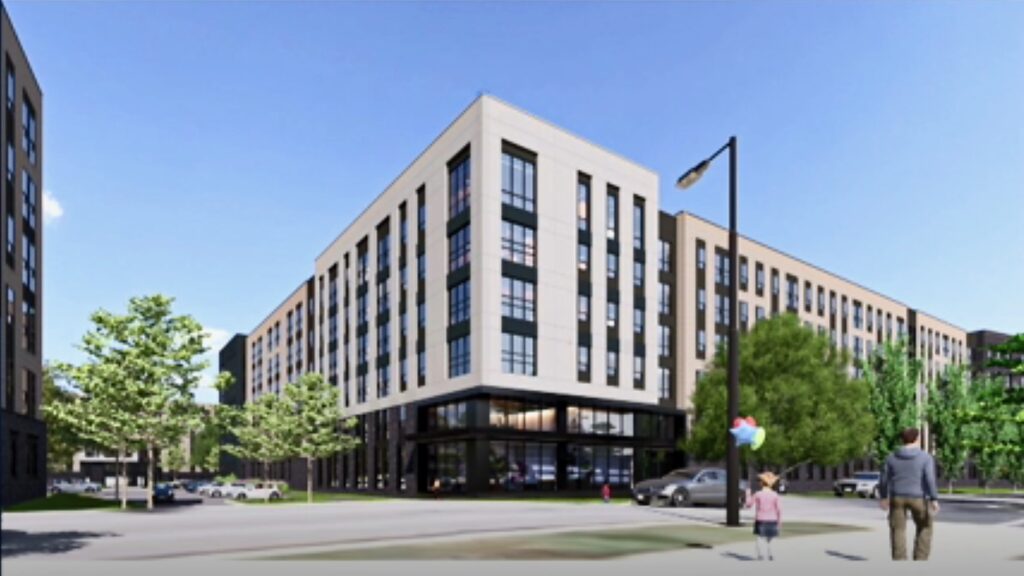
Greystar development director Daniel Nickerson said during a preliminary plan review in the summer that each six-story building will have apartment-style units with their own kitchens, washers and dryers. Among the four buildings, 55% of units will be four-bedrooms, 25% will be three-bedrooms and the remaining 20% will be one-bedroom and studio apartments.
Amenities will reflect a focus on health and wellness, with year-round fitness centers in both phases, pedestrian paths and walkable streetscapes, direct access to bicycle infrastructure
two outdoor amenity terraces and outdoor plantings, green spaces, gathering areas and amenities, Nickerson said on Dec. 3.
A number of legacy and heritage trees will be preserved, most notably in the outdoor gathering spaces created between the buildings “to make it feel very campus-like,” Nickerson said.
Landscaping buffers also will be utilized along University Drive and Hastings Road to reduce the visibility of the complex from the street.
College Township’s planned “Path to Campus,” a shared-use path running from Puddintown Road to Hastings Road parallel to East College Avenue, will be routed around and have a connection to the housing complex, Nasuti said.
The complex will be served by the State College Borough Water Authority and the borough and University Area Joint Authority for wastewater.
After issuing a request for proposals, Penn State’s Board of Trustees in November 2024 approved a ground-lease with Greystar to build and operate the complex on the university-owned land. Terms of the lease were not disclosed.
Greystar representatives said during the preliminary review in the summer that rental rates would be “affordable” for “everyday students” in the context of existing market rates, but have not to date said what the rates would be.
The complex is intended for non-first year students, according to a board of trustees presentation in 2024, and will include a mix of different unit types.
University administrators said the complex would provide more on-campus beds to meet demand, as Penn State plans a strategic increase in enrollment at University Park, while focusing on using Housing and Food Services reserves and debt for renovations of existing university-owned residence halls.